Herringbone LVT Flooring in the East Midlands: Design, Durability & Installation
Thinking about herringbone LVT flooring? We cover design, cost, fitting and what makes it work in Newark and East Midlands homes. Read our practical guide.
Why Herringbone LVT Flooring Is Everywhere Right Now
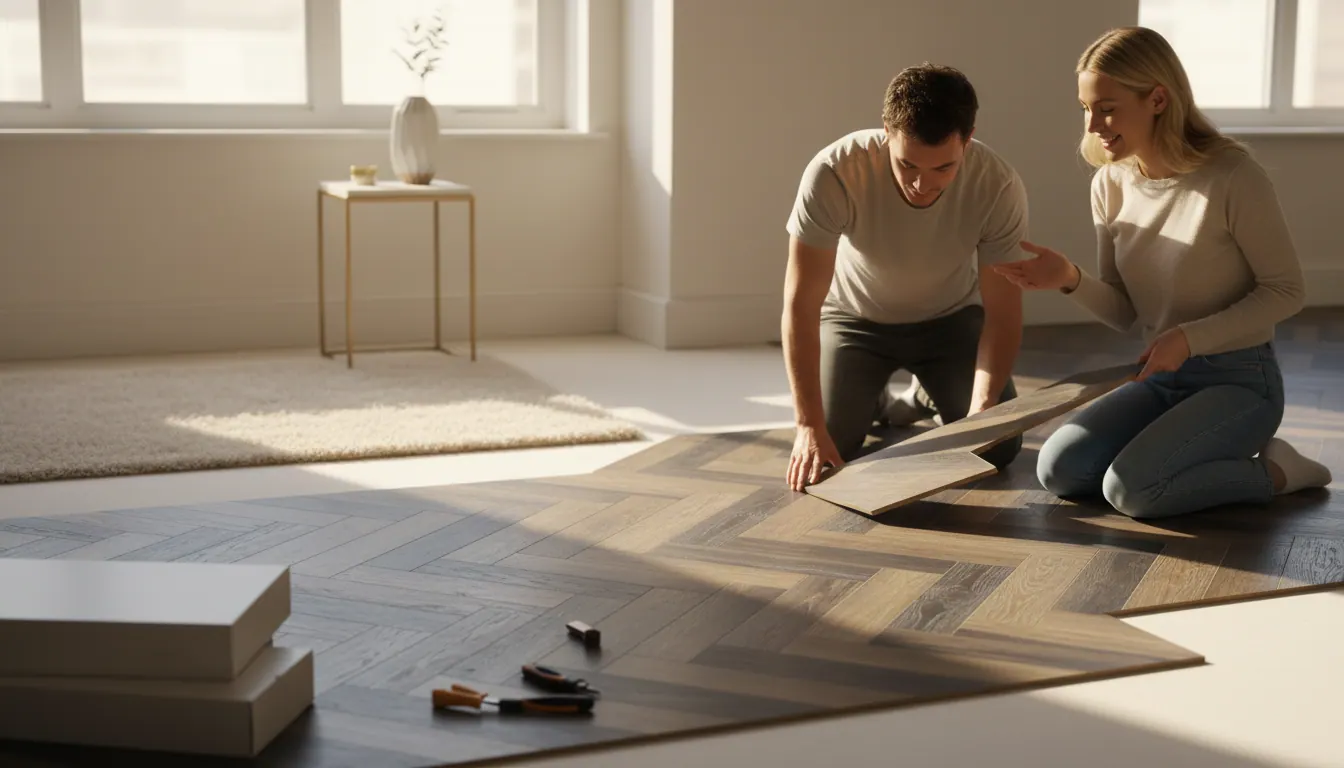
Herringbone has been around for centuries, but it has never been more accessible than it is today. Luxury vinyl tile (LVT) brings that classic interlocking pattern to almost any room in the house, at a fraction of the cost of traditional parquet, and without the fuss of a solid timber floor. We fit it regularly across Newark-on-Trent, Nottinghamshire, Lincolnshire and Leicestershire, and the demand keeps growing. Homeowners who once assumed herringbone was only for period properties or big budgets are discovering it works just as well in a modern semi in Southwell as it does in a Victorian terrace in Lincoln.
This guide covers everything you need to know before you buy: what makes herringbone LVT a genuinely good choice, where it works best, what it costs, how it gets fitted, and the honest drawbacks too.
What Makes Herringbone LVT Different from Standard Plank LVT?
Standard LVT planks run in one direction, usually laid in a brick-bond pattern. Herringbone LVT uses shorter, rectangular tiles set at 45 or 90 degrees to each other, creating that distinctive zigzag. The visual effect is striking, but the layout also adds a sense of movement and structure to a floor that a straight run simply cannot match.
There are two main formats:
- Click herringbone LVT. The tiles lock together with a click system, making them faster to lay and easier to replace individually if a tile is ever damaged. No adhesive needed, which suits most domestic rooms.
- Glue-down herringbone LVT. Each tile is bonded directly to the subfloor with adhesive. This is the more stable option for larger open-plan spaces or commercial settings, and it sits flatter underfoot because there is no floating movement at all.
Both are fully waterproof, which is one of the core reasons LVT has overtaken laminate in kitchens, hallways and bathrooms across the East Midlands. If you want a deeper comparison of LVT and laminate side by side, our article on Luxury Vinyl Tiles vs Laminate: Which Flooring Wins in Newark Homes? covers the key differences.
Is Herringbone LVT Flooring Actually Good? The Honest Answer
Yes, with a few caveats worth knowing.
The strengths are real. LVT herringbone is waterproof, scratch-resistant, warm underfoot compared to ceramic tile, and compatible with underfloor heating. It is also dimensionally stable, meaning it does not swell or shrink with humidity the way wood can. For families with children, pets or busy households, it is one of the most practical hard floors available.
The herringbone pattern itself adds another benefit: because the tiles are set at angles, minor subfloor imperfections are less visually obvious than they are with a straight plank run. That said, "less obvious" is not the same as "invisible." A badly prepared subfloor will still telegraph through any LVT, and herringbone tiles are thinner than most solid floors, so every ridge or hollow underneath matters. More on that below.
The honest limitations:
- The pattern requires more cuts, especially at the edges and around door frames. That takes more time and skill to fit well.
- Cheaper click herringbone products can feel hollow or springy underfoot if the subfloor is not properly levelled first.
- Grout lines or old adhesive from a previous floor can show through if the subfloor is not screeded flat before fitting.
None of these are reasons to avoid herringbone LVT. They are reasons to have it fitted properly.
Does Herringbone Make a Room Look Bigger or Smaller?
This is one of the most common questions we hear. The short answer: it depends on the direction.
A herringbone pattern laid diagonally (at 45 degrees to the walls) tends to make a room feel wider and more open. The eye travels across the floor rather than down it. In a narrow hallway, this can make a real difference.
A traditional 90-degree herringbone, where the tiles run parallel to the walls, creates a more structured, formal look. It suits larger rooms where you want the floor to feel grounded rather than expansive.
In the older terraced housing common across Newark and Lincolnshire market towns, diagonal herringbone in a hallway is a particularly popular choice because it visually widens a tight entrance without any structural work. In newer open-plan kitchens and living areas, the 90-degree layout tends to complement the architecture better.
How Much Does Herringbone LVT Flooring Cost?
Herringbone LVT is more expensive than standard plank LVT, and there are two reasons for that. First, quality herringbone products use more material per square metre because of the cutting waste at borders. Second, the installation takes longer. Laying a herringbone pattern correctly, keeping the angles true and the joints tight, requires more care and skill than running planks in a straight line.
As a rough guide, supply-and-fit prices for herringbone LVT in Nottinghamshire, Lincolnshire and Leicestershire typically run higher than equivalent plank LVT jobs of the same area. The exact price per m2 depends on the product specification (wear layer thickness, tile size, finish), the condition of the subfloor, and whether old flooring needs lifting first.
We bring samples to your home as part of our free measure and quote, so you can see exactly how the colour and scale of the pattern work in your actual light before committing to anything. There are no surprises on the invoice.
Why Subfloor Preparation Is Non-Negotiable for Herringbone LVT
LVT is thin, typically between 4mm and 6mm. That thinness is part of its appeal: it fits under existing door frames without major adjustment. But it also means any imperfection in the subfloor telegraphs straight through to the surface.
For herringbone specifically, the angled joints act like a reveal: if the subfloor has a slight bow or a ridge from old adhesive, the herringbone pattern will highlight it rather than hide it. This is why we carry out our own subfloor preparation before every LVT installation.
Depending on what we find, that might mean:
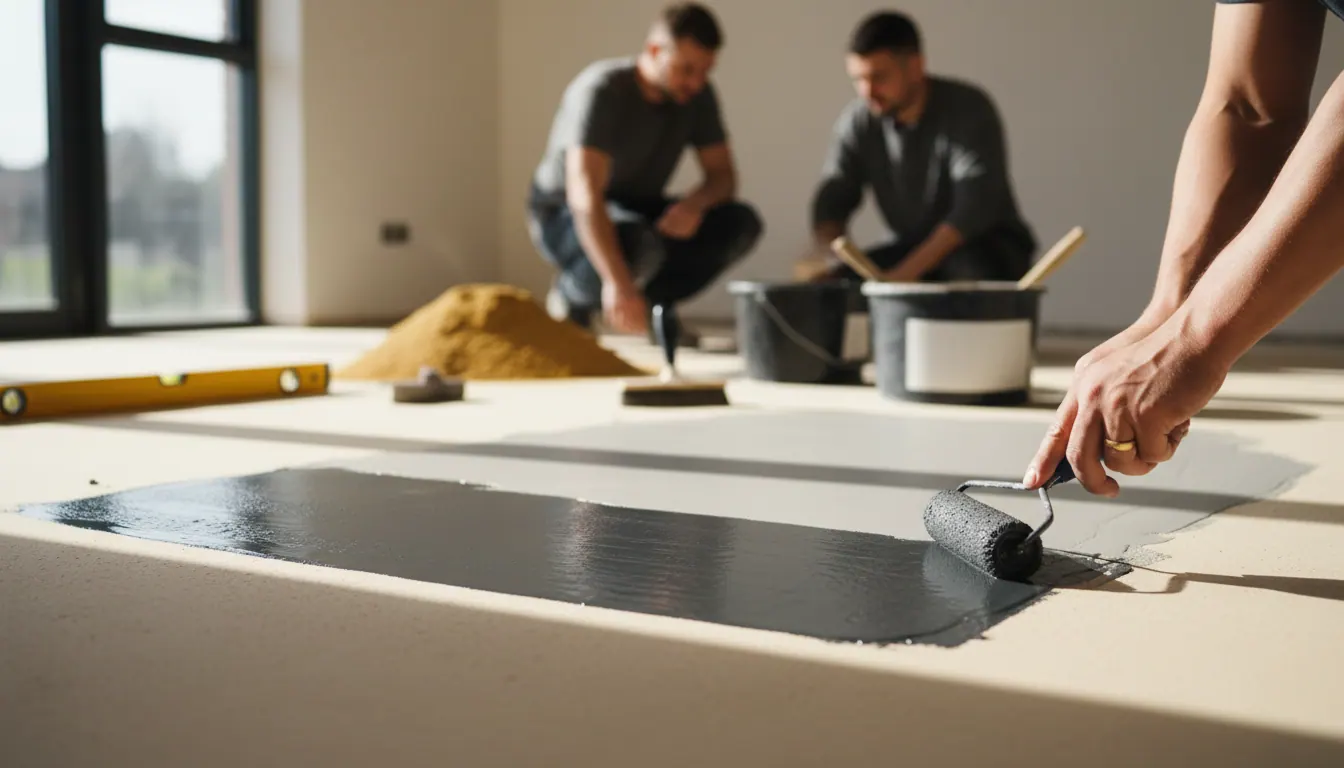
- Latex screeding to fill low spots and create a smooth, flat surface.
- Floor levelling compound across the whole area if the floor has settled unevenly.
- DPM (damp proof membrane) installation where moisture readings are elevated, which is not uncommon in older East Midlands properties with solid concrete ground floors.
Skipping this stage to save money is a false economy. The floor will fail sooner, and the repair cost will outweigh whatever was saved. Our article on Subfloor Preparation for Flooring in Newark: Why DPM, Levelling & Screeding Matter goes into the detail of exactly what is involved and why it changes the outcome of any fitted floor.
What Our Customers Say
Stuart came to us unsure of what he wanted. We brought samples to his home, talked through the options and explained the process from start to finish.
"From the first meeting with Pro flooring we have been very happy with the service we recieved. We weren't sure what flooring we wanted but Nathan was brilliant and helped us by showing lots of samples and explaining the process to us. He turned up on time to do the job and we are very happy with his work. We would recommend him and Pro Flooring to friends and family."
, Stuart Millard
That experience is typical of how we work. We do not expect customers to arrive knowing exactly what they want. Part of our job is helping you get there.
Herringbone LVT in New-Build Homes Across the East Midlands
We work as a flooring subcontractor on new-build developments across Nottinghamshire, Lincolnshire and Leicestershire, and herringbone LVT is increasingly specified by developers who want a premium finish without the cost of engineered hardwood.
On new-build plots, the subfloor is usually a clean screed, which means preparation is more straightforward. The main priority is consistent results across every unit: matching angles, tight joints and the same finish in every hallway and kitchen. That consistency matters to developers because it affects handover inspections and buyer satisfaction.
If you are a developer or site manager looking for a reliable flooring subcontractor in the East Midlands, get in touch to discuss plot volumes and scheduling.
Frequently Asked Questions About Herringbone LVT Flooring
Is herringbone LVT more expensive than standard LVT? Yes, generally. The pattern requires more cuts at the edges, which increases material waste, and the installation takes more time to get right. The premium over standard plank LVT varies depending on the product and the room size, but it is a real cost worth factoring in when you budget.
What are the negatives of LVT flooring? The main ones are: it can feel hollow underfoot if the subfloor is not flat; it can be damaged by heavy point loads (castors on heavy furniture, for example); and cheaper products have a thinner wear layer that shows scratches sooner. None of these are problems if you choose a good-quality product and have it fitted over a properly prepared subfloor.
Does herringbone make a room look bigger or smaller? Diagonal herringbone (45 degrees to the walls) tends to make a room feel wider, which is useful in narrow hallways. A 90-degree herringbone creates a more formal look and suits larger rooms. The tile size matters too: larger tiles read as more spacious in bigger rooms.
Is glue-down or click herringbone LVT better for a home? Click herringbone is fine for most domestic rooms and is easier to replace if a tile is damaged. Glue-down is the better choice for large open-plan areas, commercial spaces or rooms where you want absolute stability underfoot. We will advise you on which suits your specific floor after we have seen the subfloor condition.
Ready to see how herringbone LVT would look in your home? We offer a free measure and quote across Newark-on-Trent and the wider East Midlands, and we bring samples to you. Get in touch with us and we will take it from there.
“Nathan has done an exceptional job supplying and fitting our 3 bedroom house with carpets, vinyl and LVT. All fitted to a very high standard. We are extremely happy and will recommend Nathan to anyone looking for a professional job. Thank you Pro Flooring!”