LVT Flooring Installation in Newark: Why Professional Fitting Matters (Oak Effect & Beyond)
Everything you need to know about LVT flooring installation in Newark and the East Midlands, subfloor prep, fitting methods, costs and why it matters.

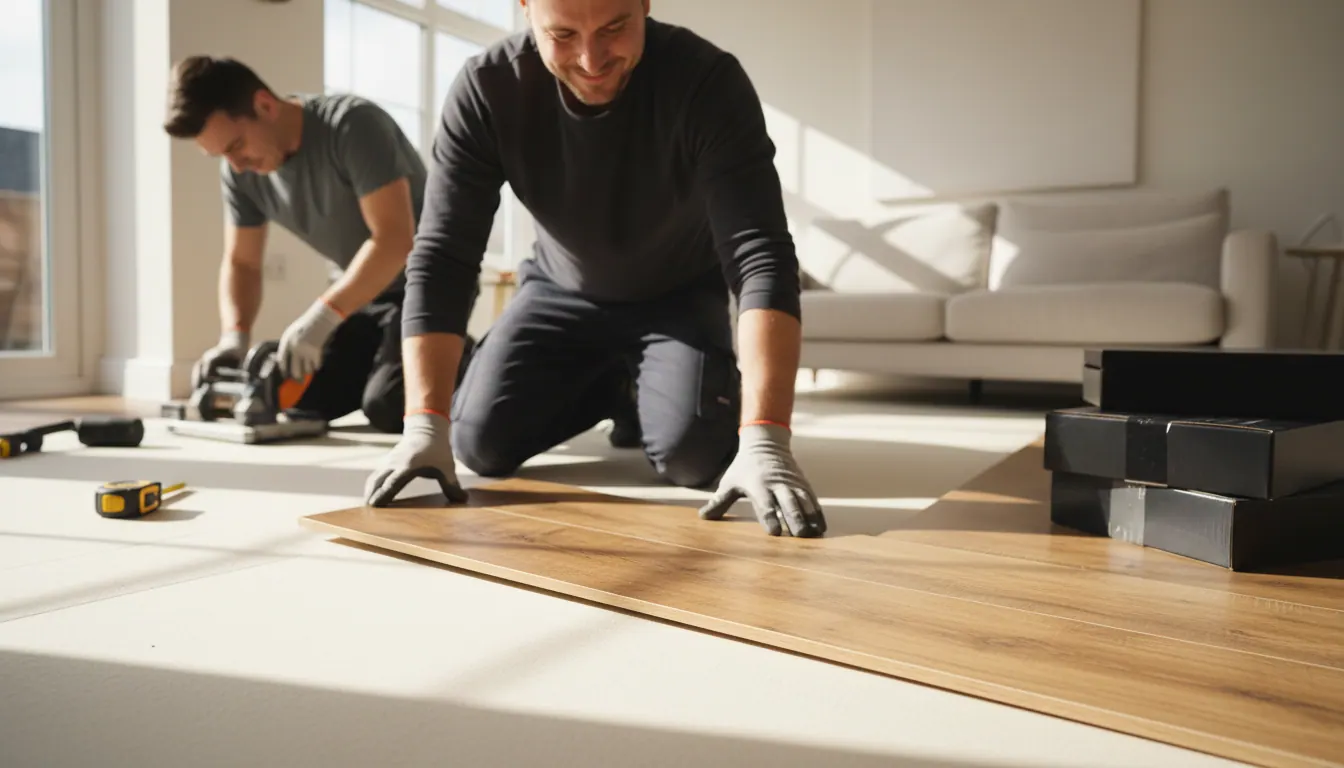
LVT Flooring Installation: The Bit Most Guides Skip
Most articles about LVT flooring installation spend a lot of time telling you how to do it yourself. This one takes a different angle, because the honest truth is that the floor you end up with depends far less on which product you pick and far more on what happens underneath it before a single tile goes down.
We fit LVT across Newark-on-Trent, Nottinghamshire, Lincolnshire and Leicestershire. We also prepare the subfloors ourselves. That combination matters, and we'll explain exactly why throughout this article.
What Does LVT Actually Need to Be Laid On?
LVT is thin. Most planks and tiles sit somewhere between 2.5mm and 6mm thick. That thinness is part of what makes it so practical, but it also means every ridge, dip, hollow or contaminated patch underneath it will telegraph straight through to the surface. You'll feel it underfoot. You'll see it catch the light. And over time, the floor will wear unevenly, lift at the edges or start to creak.
The standard tolerance for a subfloor receiving LVT is no more than 3mm deviation over a 1.8-metre straightedge. Most existing floors, whether concrete or timber, don't meet that spec without preparation work.
What that preparation looks like depends on your subfloor type:
- Concrete subfloors. These need to be assessed for moisture first. If there's rising damp or residual construction moisture above the accepted level, a damp proof membrane (DPM) needs to go down before anything else. Once moisture is dealt with, any high spots are ground back and the whole surface is latex screeded to achieve a flat, smooth, consistent base.
- Timber subfloors. Any movement in the boards needs to be eliminated, loose boards screwed down, gaps filled. Then a suitable overlay board or latex compound brings the surface level.
- New-build concrete. Freshly poured slabs hold moisture for a long time. We test every plot before we lay, because fitting LVT over a slab that hasn't dried out properly is one of the most common causes of adhesive failure.
If a company quotes you for LVT fitting without asking anything about your subfloor, that's worth questioning.
Does LVT Flooring Need to Be Glued?
This is one of the most common questions we hear, and the answer is: it depends on the product.
There are two main installation methods:
Click LVT (floating installation). The planks or tiles lock together mechanically and float over the subfloor without adhesive. This is quicker to fit and easier to replace individual sections if damage occurs later. It works well in residential rooms with a good subfloor. However, click LVT still needs a flat surface beneath it. The floating nature means it moves very slightly with temperature changes, so it's not always the best choice for very large open-plan areas or commercial environments.
Glue-down (dryback) LVT. Each tile or plank is bonded directly to the subfloor with a pressure-sensitive adhesive. This gives a more stable, permanent result. It's the method we use most often for herringbone and chevron patterns, because those layouts require precision and the tiles need to stay exactly where you put them while you build the pattern out. Glue-down is also the better choice for bathrooms, kitchens and any area that sees heavy foot traffic.
Both methods work. The right one depends on the specific room, the subfloor condition and the pattern you're going for.
Why Herringbone and Chevron Need Extra Care
Herringbone LVT is one of our most-requested finishes right now, across homes in Newark, Grantham, Lincoln and throughout the East Midlands. It looks genuinely impressive when it's done well. It also shows every mistake.
A herringbone layout is set out from a centre line, and that centre line has to be calculated precisely for the specific room dimensions, taking into account the position of doorways, bay windows, fireplaces and anything else that creates a visual focal point. Get the set-out wrong and you end up with awkward cuts at the skirting on one side and a pattern that looks visually off-centre even if you can't immediately pinpoint why.
With glue-down herringbone, the tiles also need time to be positioned, adjusted and pressed firmly before the adhesive grabs. That requires experience and a calm, methodical approach. It's not a job that rewards rushing.
What Our Customers Experience
Natalie King left us a review after we fitted her new lounge floor, and it captures something we think is worth sharing:
"We would highly recommend pro flooring after using them for our new lounge flooring this week. Impeccable work done by Nathan and a great job from start to finish. Nathan gave us plenty of time to choose from a range of LVT samples, using his knowledge and experience to help us choose the right tile. He measured down to the T ensuring the was no waste and made sure every detail was finished to the highest standard. He even went out of his way to colour match the grout and silicone to the fireplace tiles. We're so happy with our beautiful new flooring. Amazing craftsmanship. Thankyou so much!"
The detail about colour-matching the grout and silicone to the fireplace tiles is exactly the kind of thing that separates a finish you're genuinely proud of from one that's merely acceptable. It's also the kind of thing that only happens when the fitter is paying attention to the whole room, not just the floor.
We bring samples to your home for the same reason. Colours and textures look completely different on a showroom floor under artificial lighting than they do in your actual room with your furniture and your natural light. Choosing from samples in situ means fewer surprises.
Installing LVT in Bathrooms and Kitchens
Both rooms are perfectly suited to LVT, but both have specific requirements.
In bathrooms, the key concerns are moisture resistance and the junction between the floor and any wet areas (bath panels, shower trays, toilet bases). LVT itself is waterproof. The fitting method and the detailing around edges and junctions needs to match that. Silicone rather than grout at the perimeter. No gaps where water can track underneath.
In kitchens across Nottinghamshire and Lincolnshire, we frequently encounter older concrete subfloors with variable moisture readings and uneven surfaces from decades of settlement. This is exactly the scenario where subfloor prep earns its cost back. A properly levelled, DPM-treated base means the LVT sits flat, bonds well and lasts.
For anyone comparing LVT against laminate for a kitchen or bathroom, our article Luxury Vinyl Tiles vs Laminate: Which Flooring Wins in Newark Homes? goes into the differences in practical detail.
How Much Does LVT Installation Cost?
We're not going to give you a number here that doesn't apply to your home, because the honest answer is that it varies. The main factors are:
- The area to be covered (square metreage)
- The condition of the existing subfloor and how much preparation is needed
- The product chosen (price per square metre varies across the range)
- The pattern (herringbone and chevron require more time and skill than straight plank)
- Access and any complications specific to the property
What we can tell you is that we offer a free home measure and quotation across Newark and the wider East Midlands. We come to you, assess the subfloor, take accurate measurements and give you a written quote. No guesswork, no surprises on the day.
If you're fitting across multiple rooms and want to think about how the floors connect and coordinate, our article on multi-room flooring projects in Newark covers that planning process in detail.
Frequently Asked Questions About LVT Flooring Installation
Is it easy to install LVT yourself? Click LVT can be fitted as a DIY project in a straightforward room with a good subfloor, but most problems we're called in to remedy come from skipped subfloor preparation rather than the fitting itself. If the surface isn't flat, the floor won't perform as it should, regardless of how carefully the tiles were laid. Glue-down LVT and pattern layouts like herringbone are significantly more demanding and are best left to an experienced fitter.
What does LVT need to be laid on? A flat, dry, clean, structurally sound surface. The tolerance is tight: no more than 3mm deviation over 1.8 metres. Concrete subfloors often need latex screeding. Timber floors may need overlay boards or levelling compound. Moisture must be tested and addressed before any LVT goes down.
Does LVT flooring need to be glued? Not always. Click LVT floats without adhesive. Glue-down (dryback) LVT is bonded directly to the subfloor. Glue-down gives a more stable result and is the preferred method for pattern layouts, high-traffic areas and commercial installations.
How long does LVT installation take? A single average-sized room can usually be completed in a day, including final finishing. Larger areas, multi-room projects or those requiring significant subfloor preparation will take longer. We'll give you a realistic timeframe when we come to measure up, so you can plan around it.
Ready to Talk About Your Floor?
If you're thinking about LVT in your home across Newark-on-Trent, Nottinghamshire, Lincolnshire or Leicestershire, we'd love to come and take a look. We bring samples, assess the subfloor, measure accurately and give you a clear written quote. No pressure, no obligation.
Get in touch with us today and we'll arrange a time that suits you.
“Absolutely love my new floor! Luxury vinyl tiles, oak effect. Beautiful quality, expertly fitted, totally reliable service. Very happy.”