Old Flooring Removal & Disposal in Newark: What to Expect & Why It Matters
We lift and dispose of your old flooring as part of every installation. Here's exactly how our removal and disposal process works across Newark and the East Midlands.

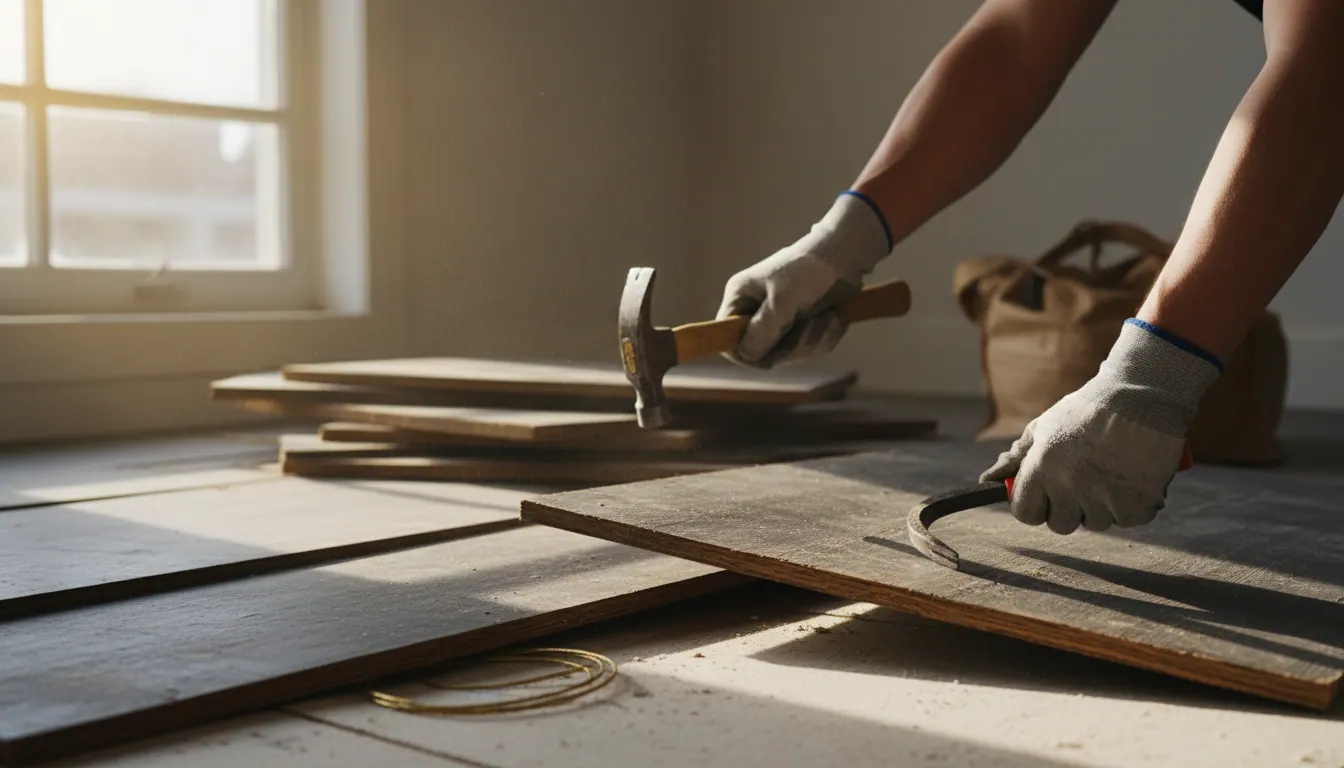
Old flooring out, new flooring in: how we handle removal and disposal
Most people focus entirely on the new floor. The colour, the finish, the material. That is completely understandable. But before a single plank of LVT or a roll of carpet goes down, the existing floor has to come up cleanly and the subfloor has to be in a fit state to receive it. Skipping or rushing that stage is one of the most common reasons a new floor fails within the first year.
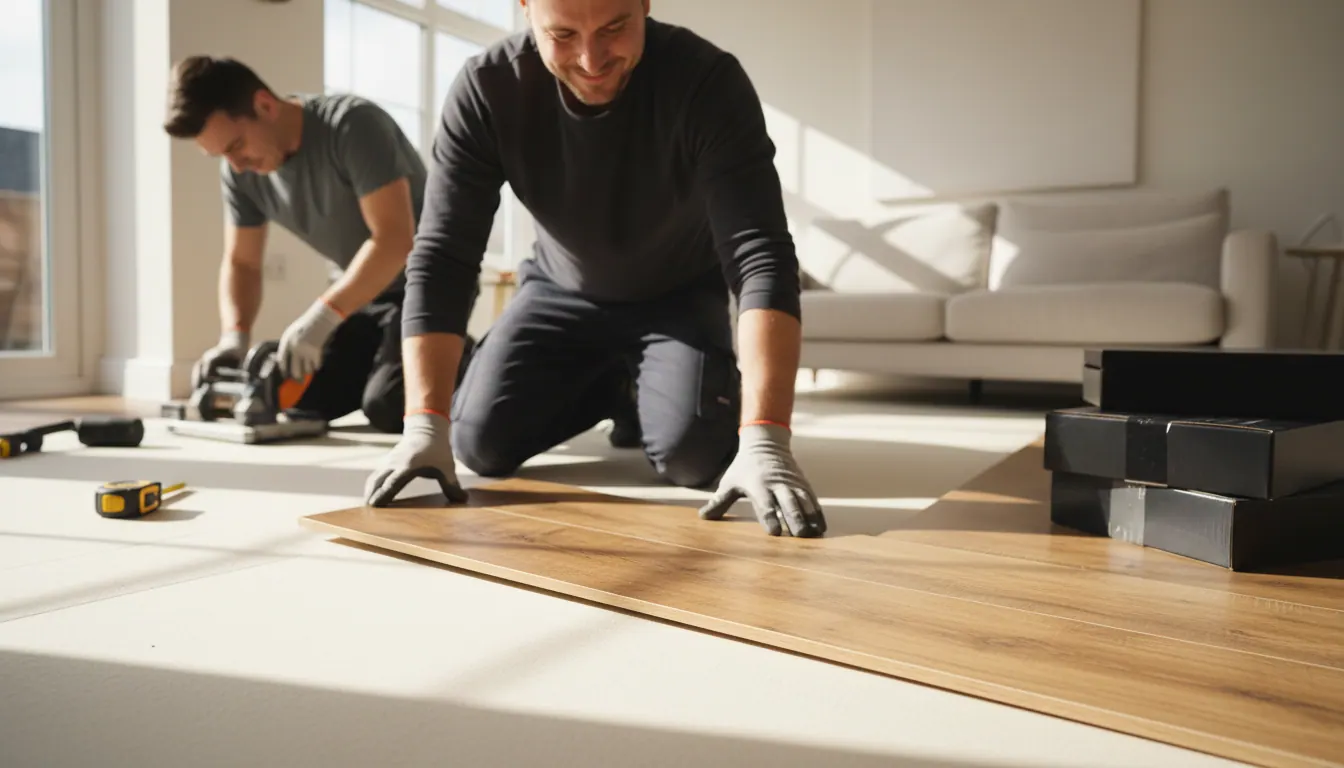
We include old flooring removal and disposal as standard on every installation job we carry out across Newark-on-Trent, Nottinghamshire, Lincolnshire and Leicestershire. You do not need to hire a skip, book a separate trade or spend a weekend on your hands and knees with a bolster chisel. We take care of it, and we take the waste with us.
What types of flooring do we remove?
We lift and remove all common domestic floor coverings:
- Carpet and underlay (including gripper rods and staples)
- Laminate flooring (click-lock and glued)
- Vinyl sheet and vinyl tiles
- LVT and Karndean-type luxury vinyl tiles, including glue-down formats
- Engineered hardwood and solid wood boards
- Ceramic and porcelain tiles (discussed at survey stage, as this affects subfloor condition significantly)
Some materials are faster to lift than others. A floating laminate floor with no adhesive comes up quickly. Glue-down LVT and ceramic tiles take considerably longer, and the adhesive residue left behind almost always needs treating before the new floor can go down. We will tell you honestly at the free home measure exactly what is involved for your specific floor.
Why proper removal matters for your new floor
This is the part that does not get talked about enough. Flooring removal is not just a tidying-up exercise. It directly affects how well your new floor performs.
LVT, for instance, is typically between 4mm and 6mm thick. At that thickness, any ridge, lump or dip in the subfloor telegraphs straight through the finished surface. A 3mm lip left by an old tile adhesive patch, a staple not pulled flush, a screw head proud of the boards, all of these will show, and in time they will cause the new floor to crack, lift or wear unevenly at that spot.
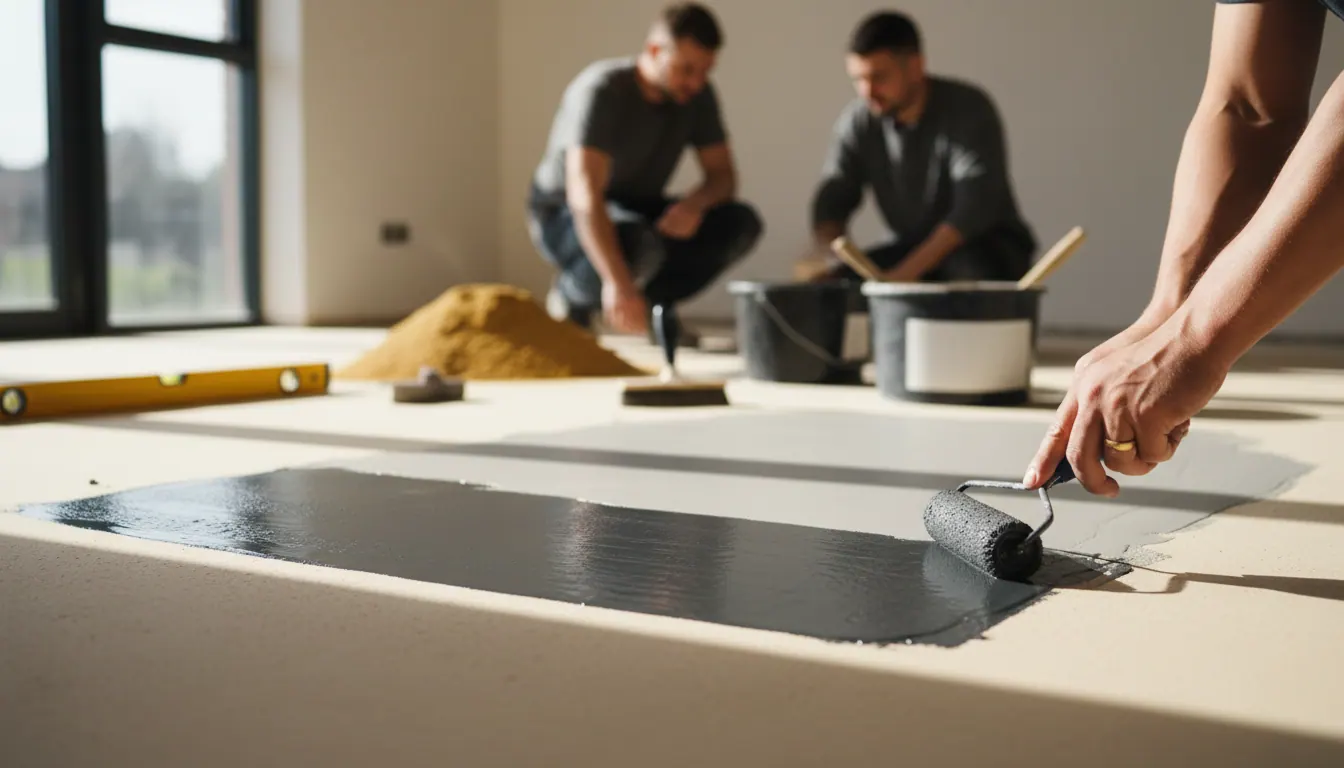
That is why our removal process feeds directly into our subfloor preparation work. Once the old floor is up, we assess the subfloor condition properly. If levelling compound, a damp proof membrane or latex screeding is needed, we do that in-house before the new material goes down. You can read more about why that step matters in our article on subfloor preparation for flooring in Newark.
How we dispose of old flooring
Once lifted, the old flooring is bagged, loaded and taken away by our team on the same day. We do not leave it stacked in your garden or piled in the hallway for you to deal with later.
Disposal is handled responsibly. Different materials go to different waste streams:
- Carpet and underlay are bulky but relatively straightforward to dispose of via licensed waste carriers
- Laminate and engineered wood can often be processed through timber recycling routes where available
- LVT and vinyl are classified as mixed plastic waste and go to appropriate commercial waste facilities
- Tile adhesive and grout debris is treated as construction waste
We are not a skip hire company, and we do not charge a separate disposal fee on top of the installation quote. The cost of lifting and removing your old floor is built into our overall price, which we confirm clearly at the survey stage. No surprises on the invoice.
What a customer said about the clean-up
This is exactly the kind of thing that matters to people once the job is done. Trish, whose husband Mick left this review on Google, put it plainly:
"Nathan was the ultimate professional and friendly and courteous. He made a superb job and went the extra mile in cleaning up and disposing of the old flooring. We are really happy with our new flooring. His prices were good and the range of flooring was extensive. Would highly recommend Pro Flooring to everyone. Ten out of ten. Trish."
"Went the extra mile in cleaning up and disposing of the old flooring." That phrase stands out because it reflects what we think should just be the standard. When we leave a property, the new floor is down, the waste is gone, and the room is clean. That is the job done properly.
How much does it cost to remove existing flooring?
Removal cost depends on three things: the material being lifted, the area involved, and the condition of the subfloor underneath.
A straightforward carpet lift in a single bedroom is a very different job to pulling up a glued-down herringbone LVT across an open-plan kitchen and dining room in a period property in Lincolnshire, where the subfloor may be uneven or damp-affected. We do not publish fixed per-square-metre removal rates because quoting blind would either mean overcharging you or underquoting and having a difficult conversation later.
What we do offer is a free home measure across our entire service area. We come to you, look at what is there, and give you a clear, itemised quote. That quote covers supply, fitting, removal and disposal. You know the full cost before any work starts.
How difficult is it to remove laminate flooring yourself?
Floating laminate clicks apart reasonably easily if you have the time and the right tools. Start at a doorway, pull the boards up at an angle and work back across the room. The underlay usually peels away in sections.
The harder part is what you do with it afterwards. A standard room of laminate flooring generates a surprisingly large volume of waste. It does not compact, it cannot go in a household wheelie bin, and most local authority tip sites in Nottinghamshire and Lincolnshire have limits on how much construction-type waste a single household can drop off in one visit. You will likely need multiple trips or a hired skip.
If you are fitting new flooring anyway, the easier option is to let us include the removal in the installation job. It is usually more cost-effective than DIY disposal when you factor in your own time and transport.
What happens if the subfloor underneath is in bad condition?
This comes up regularly, particularly in older housing stock across the East Midlands. Nottinghamshire and Lincolnshire have a significant proportion of pre-1970s housing, where subfloors may be suspended timber boards with gaps, or solid concrete that has never had a damp proof membrane installed.
Once the old floor is lifted, we assess what is there. If the subfloor needs attention, we talk you through the options before proceeding. Common issues include:
- Uneven concrete requiring levelling compound or latex screeding
- Rising damp requiring a DPM before any new floor can be fitted
- Loose or springy timber boards requiring re-fixing or sheet material overlay
- Adhesive residue from old vinyl or LVT requiring grinding or skim coating
None of this is unusual. It is just part of doing the job properly. We carry out all of this subfloor work ourselves, so there is no gap between the removal team and the preparation team. It is the same crew, the same visit, the same standard.
If you are weighing up LVT against laminate for the new floor and wondering how subfloor condition affects that choice, our article on LVT vs laminate for Newark homes covers the practical differences in detail.
Frequently asked questions
How much does flooring removal cost in Newark and the East Midlands? There is no single answer because removal cost depends on the material, the area and what the subfloor looks like underneath. We include removal and disposal in our installation quotes, confirmed at the free home measure. You will have a clear total price before any work begins.
Can I dispose of old laminate flooring at my local tip? You can take small quantities to household waste recycling centres in Nottinghamshire and Lincolnshire, but most sites have limits on construction-type waste. A full room of laminate boards will likely exceed those limits, meaning multiple trips or a skip hire. If you are having new flooring fitted, it is usually simpler and more cost-effective to have us include the removal in the job.
What do I do with old laminate flooring if I am not replacing it immediately? If you are lifting it yourself and storing it temporarily, keep it flat and dry. Laminate that gets damp will swell and become unusable as a material and harder to dispose of cleanly. For actual disposal, your options are a hired skip, a licensed waste carrier, or a household recycling centre in manageable loads.
Does removing old flooring damage the subfloor? It can do, depending on the material and how it was originally fitted. Glue-down vinyl and LVT in particular can pull at the surface of a concrete subfloor when lifted. Ceramic tiles almost always leave adhesive residue that needs grinding back. We assess the subfloor condition as part of the removal process and factor any preparation work into the overall quote.
Ready to get your old floor lifted and a new one fitted properly? Get in touch with us for a free home measure across Newark-on-Trent, Nottinghamshire, Lincolnshire and Leicestershire. We will come to you, bring samples, assess the subfloor and give you a clear quote with no hidden costs.